

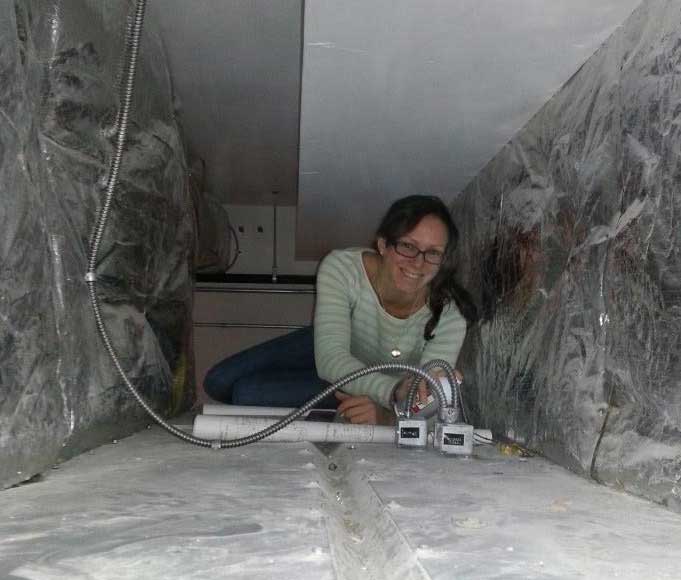
I have been involved with hundreds of projects in one capacity or another where I’ve designed or commissioned HVAC systems. With only a few exceptions, it’s been my experience that ductwork is never installed exactly as drawn. Most of the time it’s close. Usually, this is due to a lack of coordination during design requiring in-field modifications or a lack of detail when it comes to equipment hookups. We all expect design engineers to have their designs perfectly coordinated and their equipment details to be exact. I was on the design side for more than 10 years and I can tell you that there is never enough fee or enough time in the design schedule for that to be a reality. Until that changes, we’d all better expect field modifications.
3 min read
Design vs. Installation: Small Details Have Big Impacts
Topics: Energy Efficiency Building Performance & Technology
5 min read
Why Are Lighting Energy Standards Decreasing?
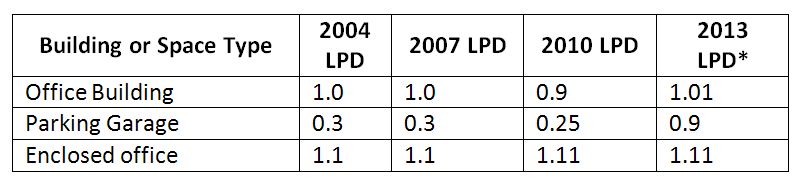
I’m finding that the lighting energy requirements of ASHRAE/IESNA Standard 90.1 are less efficient than standard practice in the field. Standard 90.1 is the “Energy Standard for Buildings Except Low Rise Residential Buildings” and is often used by design professionals as the de facto energy code. The 2013 edition of the Standard has just been released and amazingly, the allowed lighting power density (LPD)1 has increased since 2004 for several common space types, such as private offices, and for multiple building types, including offices and parking garages. Yet, since 2004 the energy efficiency of lighting equipment has improved dramatically. Why is the code going the wrong way?
Topics: Standards and Metrics Energy Efficiency
3 min read
PM: Preventative Maintenance or Poorly Maintained?

In facilities management and building owner circles, Preventative Maintenance (PM) contracts are seen (at least in theory) as a good way to outsource the routine maintenance of some/all building equipment. As an example, a HVAC PM contractor could change air filters in air handlers and terminal equipment, replace belts, drain and fill cooling tower systems before and after the winter, grease bearings, possibly perform chemical treatment of hydronic or condenser water systems, and perform other routine service tasks. The frequency and scope of service varies from contract to contract—some items are replaced on an as-needed basis—for example, belts may be inspected at some predefined interval, and replaced as wear is evident. Other tasks may be scheduled as a standard interval—such as filter changes. And still other tasks may be triggered by variables such as climactic conditions—for example, when a cooling tower is drained for the winter or refilled in the springtime.
Topics: Energy Efficiency Building Performance & Technology
2 min read
HVAC Control Sequences of Operation and ASHRAE Research Project (RP) 1455
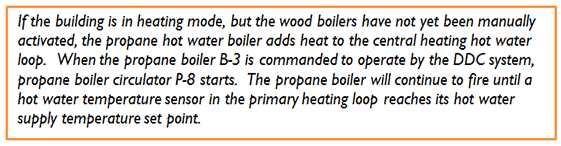
HVAC control sequences of operation have a direct impact on the effectiveness and efficiency of building systems. When specified and programmed correctly, control sequences of operation enable HVAC systems to efficiently meet the loads placed upon them. When designed and implemented incorrectly, sequences of operation can cause HVAC systems to either fail to meet building loads or waste energy (e.g. a system trying to simultaneously heat and cool the same space). In order for HVAC systems to operate at their peak efficiency, the control sequences of operation need to be appropriate for both the equipment type and the application.
Topics: Building Cx & Design Review Energy Efficiency
3 min read
Autumn Shoulder Season To-Dos: Preparing HVAC Systems for Colder Weather

With the hot, humid weather behind us, it’s time to review the status of our HVAC systems and ensure they are prepared to operate efficiently in the shoulder season and winter months.
Topics: Energy Efficiency Building Performance & Technology
3 min read
Domestic Hot Water Heating Using Air Source Heat Pumps

Air source heat pumps have been around for a long time. Especially in climates more moderate than the northeastern United States, they have been the primary space conditioning equipment for a large fraction of homes. Relatively recent developments in high efficiency air-source heat pump technology have pushed heat pumps into colder climate zones such as the northeast US, and have pushed the technology into different end uses. Over the past several years, water-source heat pumps for domestic hot water heating applications have entered the marketplace in the US. Five years ago, heat pump water heaters (HPWH) were difficult to find; now, most major water heater brands have a heat pump water heater option.
Topics: Energy Efficiency Building Performance & Technology
5 min read
The America's Cup and Building Energy Resiliency

Topics: Energy Efficiency Building Performance & Technology
3 min read
The Energy Star Portfolio Manager Upgrade – New Useful Features
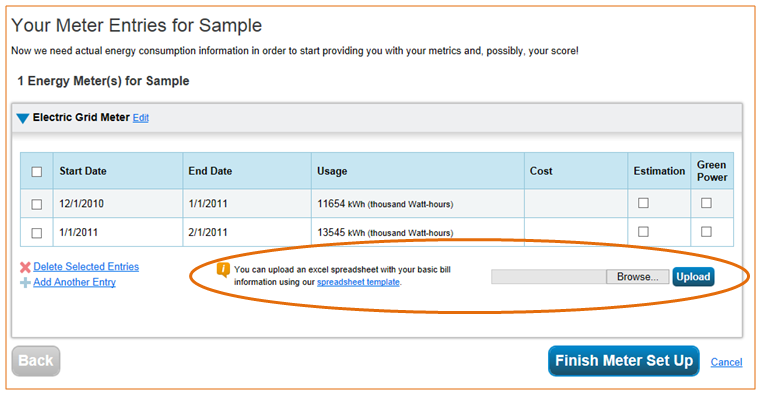
I recently had the opportunity to familiarize myself with the Energy Star Portfolio Manager system, which is a free online tool to track and analyze a building’s energy usage via benchmarking. Benchmarking has been previously blogged about by Ben Fowler and Jennifer Chiodo. Certain property types (e.g., hospital, medical office building, office building, etc.) are eligible for an Energy Star score when you have at least 12 months of utility data.
Topics: Energy Efficiency
3 min read
Data Analytics in Energy Use Disaggregation and Energy Efficiency

You might have noticed that data analytics (i.e., “Big Data”) have been getting a lot of attention lately in the media. “Big Data” is now a common topic of discussion in media outlets covering business and technology ventures. “Big Data” generally refers to the work of corporations like Google and IBM that use large digital data sets of consumer or civil activities to reveal meaningful patterns and relationships that may be exploited. The recent growth of data analytics as a business venture is an outgrowth of increasing amounts and types of digital data, such as Internet search data, cell phone location data, and utility “smart meter” power consumption data. Smart meters now provide the unprecedented capability to collect and analyze real-time electric power consumption data across much of the electric grid. Right now there is considerable interest around using smart meters and data analytics to gain insight into energy efficiency opportunities in residential and commercial buildings.
Topics: Standards and Metrics Energy Efficiency Building Performance & Technology
3 min read
Financing Energy Efficiency – A Bull in the China Shop?

I’ve been working in the energy efficiency arena since I started designing buildings under California’s brand new energy code in the early 1980s. I’ve worked in most sectors of the industry from projects to programs, implementation to evaluation and policy. During my tenure financing has been a rising cry as a means to move the market. While I agree that financing is a critical tool in the belt of energy service providers, it is not a panacea and in fact, too much focus on financing as a solution without a clear understanding of the systemic barriers to energy efficiency may result in broken programs that don’t meet goals.

