

Recently, while reviewing the controls strategy for a large building’s condenser water pumps, I came across something I wanted to share – a simple opportunity for efficiency with no first cost. One, in fact, that increased pumping efficiency by 16% for a large portion of the annual operating hours. To find this opportunity, we considered the off-peak performance of the pumping system, not just its ability to meet peak loads.
5 min read
Condenser Water Pumps: How to Get 16 Percent More - for Free

Topics: Energy Efficiency Building Performance & Technology
5 min read
Summer Barbecue With the Refrigerant R-290
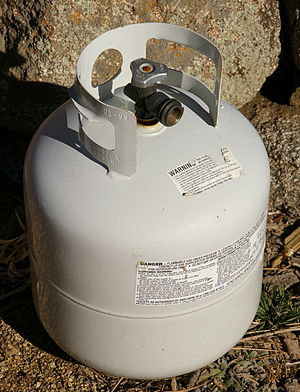
Over the weekend I connected a tank of the refrigerant R-290 to my gas grill, fired it up, and had some delicious fresh grilled Vermont sweet corn on the cob. Very tasty.
Topics: Sustainability Green Building
4 min read
Is “Whole Building” Energy Consumption Whole?
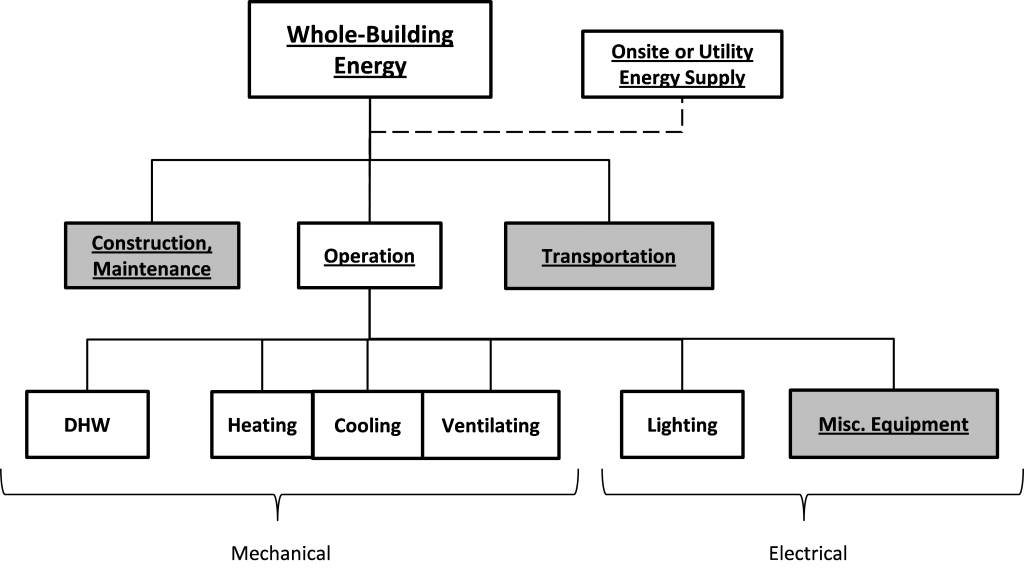
It is common knowledge in the architecture/engineering (A/E) professions that buildings consume a large portion of the total energy consumed in the United States (approximately 40 percent)[1]. This awareness serves as an essential motivator for the green building movement and the associated energy efficiency agenda in the A/E industry. As a growing number of building professionals work to improve the efficiency and sustainability of the built environment, it is worth considering how progress toward a more efficient and sustainable built environment may be constrained by industry conventions, standards, and disciplinary boundaries. You can view the industry’s concept of “whole building” energy consumption as one such constraint.
Topics: Green Building Building Performance & Technology
4 min read
The Success of a Performance Contract Lies in the Details
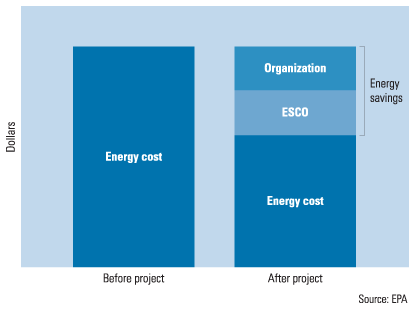
A Performance Contract with an Energy Services Company (ESCO) can be a powerful tool to enable a business to improve the performance of their facility without requiring money upfront. An ESCO assesses a facility’s energy efficiency opportunity, manages the improvement implementation and guarantees the energy savings will be greater than the cost of the project. In my recent blog post, ESCO: Energy Efficiency Investment with No Money Down, I describe the process of a Performance Contract and state “the ESCO assumes the risk of under-performance.” In recent months, however, the cost of natural gas has decreased substantially and many existing Performance Contracts are seeing negative savings for which the building owners are responsible.
Topics: Public Policy Energy Efficiency
3 min read
Choosing the Greenest Buildings
The Vermont Green Building Network (VGBN), the Vermont Chapter of the U.S. Green Building Council (USGBC), recently decided to offer an award to recognize sustainable buildings in Vermont. As a VGBN Board Member, I reached out to peers during the award development process and heard a common theme – we need to recognize buildings that have proven energy performance. People stressed this approach because the owners who are hiring architects, engineers and other consultants often can’t tell which ones have the unique expertise and skills that will result in truly high performance buildings. Many owners perceive all professionals who submit proposals as qualified and they use price as the means for selection.
Topics: Green Building Standards and Metrics
6 min read
Energy Efficiency and Sound Control: Part 3

This is the third and final post in a series focused on the connection between energy efficiency and sound control. Actually, the choice of sound control is somewhat arbitrary, and the topic could easily have been energy efficiency and temperature control, energy efficiency and lighting design, or energy efficiency and industrial process.
Topics: Workplace & People Building Performance & Technology
4 min read
Fault Detection and Diagnostics in Direct Digital Control Systems
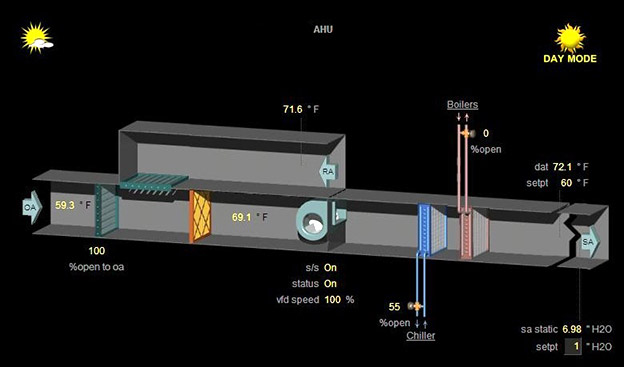
Fault Detection and Diagnostics (FDD) is an exciting new software tool used to contain energy costs and diagnose energy issues that affect the life and functionality of HVAC equipment and lighting. FDD takes the ability of the direct digital control (DDC) systems a giant leap further into analyzing the performance of these building systems.
Topics: Energy Efficiency Building Performance & Technology
6 min read
Successfully Commissioning Design Build Projects

There are a number of ways to procure design and construction services for a commercial building project. The predominant approaches are design-bid-build (DBB) and design-build (DB). The former is the practice of hiring a design team (architects and engineers) to develop a set of documents upon which multiple construction teams bid for the work. The latter, the focus of this discussion, involves the owner selecting a prime contractor or construction manager who takes responsibility for the design and construction. In some cases the contractors and their subcontractors (such as the mechanical subs) directly employ licensed personnel who provide design services; in other cases the prime and/or subcontractor hires design consultants to provide design services.
Topics: Building Cx & Design Review Energy Efficiency
3 min read
Energy Efficiency in Seawater Desalination

Desalination is an expensive and energy-intensive way to produce fresh water, but for some areas of the world, it is the only available option to support growing populations or to mitigate effects of degrading water resources. Are there opportunities to meet this demand for fresh water in a more energy efficient and cost-effective way?
Topics: Sustainability Energy Efficiency
3 min read
What Does a Ton of CO2 Look Like?

It’s hard to miss statistics about carbon dioxide (CO2) emissions these days. News stories about CO2 emissions have grown in frequency as scientists increasingly sound the alarm that anthropogenic global warming is indeed happening at an accelerated rate, largely due to increased CO2 emissions. For example, a New York Times article in March 2012, “For New Generation of Power Plants, a New Emission Rule From the E.P.A.,” describes new draft standards from the E.P.A. for coal power plant emissions. “The draft rule would limit carbon dioxide emissions from new power plants to 1,000 pounds per megawatt-hour,” writes the author. One thousand pounds of carbon dioxide. But what does that look like? Even for engineers, it’s difficult to visualize.
