


Technology and innovation have brought us great advances in energy efficiency. As examples, just look at the shift from incandescent lights to fluorescent lights and now to LEDs, or the move to variable air volume (VAV) air distribution systems from constant volume during the energy crisis of the 1970s. Those two evolutions alone have probably saved yotawatt[1] hours of electricity since they were introduced. The trend continues today with things like advanced building lighting controls and energy recovery air handlers.
5 min read
OAT (Outside Air Temperature) Reset Is Like Your Hammer
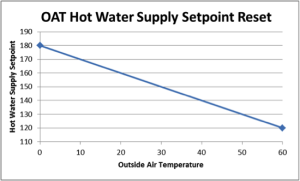
You might have heard of Maslow’s hammer, that old adage “I suppose it is tempting, if the only tool you have is a hammer, to treat everything as if it were a nail.” In my experience I’ve seen the practice of outside air temperature (OAT) reset, which is shorthand for a method by which building systems are “primed” to deal with real-time outdoor air conditions, treated as that hammer. I’ve found it in the common sequence of operations (building technology speak for the computer programs which make building systems operate) designed to control everything from supply air temperature from a VAV box, to resetting the valve positions on fin tube radiation zones.
Topics: Building Performance & Technology
3 min read
Setback Strategies for Unoccupied Healthcare Operating Rooms

In a previous blog post, I discussed the efficiency opportunity for airflow setback in healthcare operating rooms (ORs). Airflow setback is one of the more significant opportunities for energy savings in unoccupied ORs, and is included in the American Society of Healthcare Engineers (ASHE) white paper [PDF] on OR HVAC setback strategies. ASHE’s “Operating Room HVAC Setback Strategies” provides guidance that warrants consideration by facility engineers. In this post, I would like to highlight and qualify some of the important insights from ASHE regarding OR HVAC setback strategies.
Topics: Energy Efficiency Building Performance & Technology Healthcare
2 min read
Common Pre-Functional Testing Checks
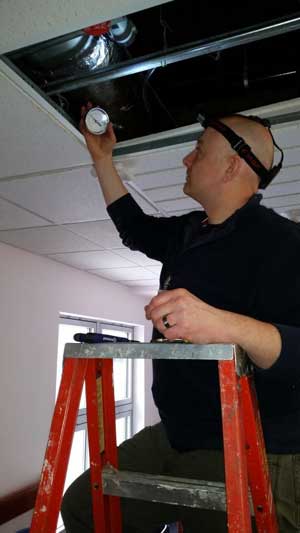
Pre-Functional testing is a vital step in the commissioning process, where issues can be identified and corrected during equipment installation. It is important to catch issues at this phase in the construction process as issues are often able to be resolved faster, easier and cheaper than if they were identified after construction is complete. Some of the equipment checks may seem a bit obvious and somewhat redundant, but we verify them on every commissioned project—and you might be surprised to learn how often these basic checks uncover deficiencies.
Topics: Building Cx & Design Review
3 min read
Customer-Facing Tools to Manage Energy Use

Commercial buildings have complex systems, end uses, and operations making managing their energy use a challenge. “Big data” is the trend in the building energy industry, but operators do not have time to analyze operating data. We need to provide building operators with easily digestible information including:
Topics: Energy Efficiency Building Performance & Technology
3 min read
Legionnaire’s Disease and Cooling Towers: Risk Management

On August 6th, the Commissioner of the New York City department of health issued an order[1] to all commercial building owners/operators in the City requiring the adoption of a new standard, issued in June 2015 by ASHRAE[2], titled Standard 188 - Legionellosis: Risk Management for Building Water Systems. The order to adopt this standard was in response to the recent Legionellosis outbreak (also known as Legionnaire’s Disease), which has resulted in 12 deaths, sickened more than 100 people, and is believed to have originated from a rooftop cooling tower above a deli in the South Bronx[3].
Topics: Building Cx & Design Review Public Policy
4 min read
Battle of the Office Thermostat – Fanger Who?

It’s that time of year again – summer – season of vacations, sunscreen (for me at least), mowing the lawn and (queue ominous music) the dreaded “Battle of the Office Thermostat.” We all know what this is. You go to work in an office and, if you’re a woman, when the man sitting next to you is perfectly comfortable you are teeth-chattering freezing. If you’re a man and the woman next to you is comfortable, you feel hot and stuffy. Disclaimer – I am a man. Second disclaimer – I don’t wear skirts and sandals to work, even if it’s 90 degrees outside.
Topics: Workplace & People Building Performance & Technology
3 min read
Why Third Party Energy Efficiency Program Evaluations?

The effectiveness of an energy efficiency program is measured in large part by the actual savings realized by the efficiency measures installed. Every program is accountable to the state’s Public Utility Commission (PUC) and utility rate payers, to ensure that public money is being invested wisely. The wise investment of public money is dependent upon how the efficiency measures are installed and operated.
Topics: Energy Efficiency Evaluation Measurement & Verification (EM&
3 min read
Pitfalls of Evaluation, Measurement and Verification

Evaluation, measurement and verification (EM&V) studies can provide a special opportunity for uncovering what is and is not working in an energy efficiency program. Energy efficiency program administrators look to EM&V studies to find out how their efficiency programs can be improved. To effectively identify opportunities for improvement, it is important for efficiency program administrators and evaluators to avoid the pitfalls of evaluation, measurement and verification.
Topics: Evaluation Measurement & Verification (EM&
3 min read
ASHRAE Guideline 36 – The Next Generation Control System
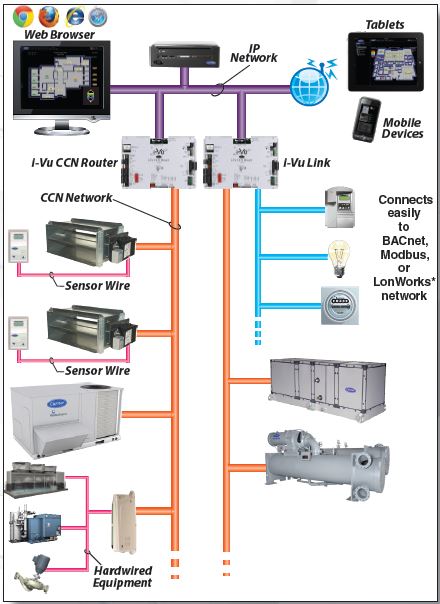
Recently I wrote a Building Management System (BMS) controls specification for a customer who needed a controls upgrade. It was an excellent opportunity for me to flex a new engineering perspective and see what energy savings I could squeeze out by retrofitting an existing mechanical system with a new control system. When it came to the sequence of operations, I decided to consult ASHRAE Guideline 36.
