
Building projects move fast. Design teams are stretched thin, schedules compress, and by the time the first shovel hits the ground, the window for catching issues in the drawings has long closed. What follows (change orders, commissioning surprises, systems that don't quite work together the way they should) is familiar to anyone who has spent time in construction.
Design review is one of the most effective tools available for preventing exactly that. And yet it remains one of the most underutilized services in the pre-construction phase, often left off the budget until it's too late to act on what a review might find.
What Does a Design Review Involve?
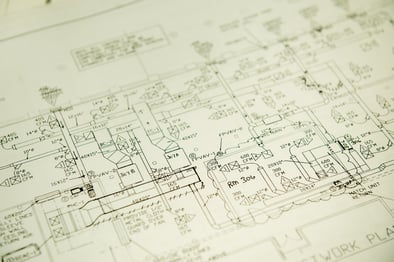
Design review is an independent, peer-level analysis of a building's MEP systems, enclosure design, or both, performed during the design phase before construction begins. We review the drawings and specifications to identify coordination issues, flag areas where the design may not meet the owner's project requirements, ensure clarity and constructability in the design, and look for opportunities to improve performance, reduce first cost, and identify operational savings over the life of the building.
Our reviewers bring backgrounds in mechanical and electrical engineering, building enclosure design, and construction management, and several hold professional credentials. That depth of experience shapes what we look for and what we find. Years of field testing and quality control work inform how we read details on paper. We know what tends to hold up in practice and what doesn't, and we bring that perspective to every review.
The Design Review Process
Our process has five steps: we issue written comments on the design documents; the owner and design team review and respond; the three parties meet to discuss the findings and agree on which changes to incorporate; the design team makes the changes; and we backcheck the next drawing set to verify they were made.
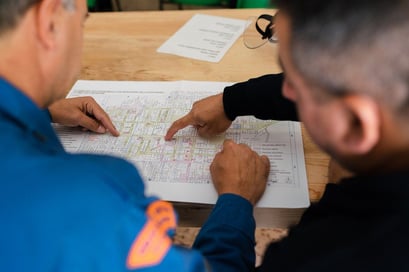
The meeting step is where the process really comes together. We approach design review as a conversation, not a critique. Our goal is to work alongside the design team and owner to reach consensus on findings and move toward a stronger set of documents. That three-party meeting is often where the most productive exchanges happen.
When is a Design Review Most Useful?
We can review at any stage: schematic design, design development, or construction documents, and often recommend more than one review at different stages. In practice, most clients engage us at the mid-to-late CD stage, when there's enough detail in the drawings to review thoroughly.
That said, earlier engagement tends to yield more actionable results and allows for a more robust discussion on system types and equipment selections. An issue or new idea identified at design development can usually be resolved or incorporated without significant cost or schedule impact. The same item found at 90% CDs is harder to address. While not every project needs reviews at all stages, the timing of a review affects what can reasonably be done with the findings; multiple reviews across design stages allow for iterative input that improves the final product.
What typically comes out of a design review?
Design review findings vary considerably by project, but some categories come up repeatedly: systems that are individually well-designed but don't coordinate well with adjacent systems; controls sequences that don't match the intent of the spaces they serve or that require additional detail to relay the intent; building enclosure details that will be very difficult or impossible to construct in the field; details that may create building durability issues over time; equipment selections or locations that create long-term maintenance challenges; and cases where owner requirements that were clearly articulated at the outset didn't survive the value engineering process intact.
On the first-cost side, it's not unusual for our reviews to identify savings opportunities that offset a meaningful portion of the review fee. On a recent 180,000 square foot project, we performed multiple peer-level reviews at strategic design milestones, identifying over $220,000 in first-cost savings, more than covering our entire project fee, along with energy savings and maintenance simplifications. We also caught several code-compliance issues, and identified a controls coordination gap that would have caused a major energy drain. While first-cost savings of that level don't happen on every project, it illustrates what's possible when the review happens early enough for the design team to act on the findings.
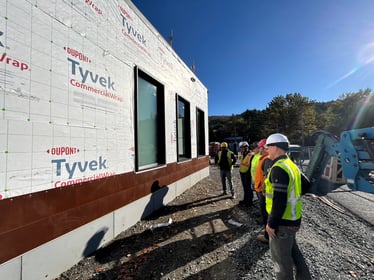
Design review also produces operational savings. A thorough review of the air barrier design, for example, improves the likelihood of meeting air tightness targets, which reduces energy costs over the life of the building and can strengthen the case for utility incentives.
Who should consider a design review?
Design review adds the most value on projects with complex MEP or building enclosure systems, tight energy performance goals, critical environments such as healthcare or laboratory facilities, LEED or other green building certification targets, compressed schedules, or owners who will operate the building long-term and care about lifecycle cost.
It is applicable across building types (office, multifamily, healthcare, education, civic, mixed-use) and is equally relevant for MEP systems, building enclosure, or both. New construction is the most common context, but renovations involving new systems or significant upgrades also benefit from independent review.
.jpg?width=386&height=257&name=1793%20Waldoboro%20MOB%203%20(2).jpg)
A new way to get a preliminary fee estimate
We recently built a tool that generates a preliminary fee estimate for design review services based on a few questions about the project: building type, design stage, approximate size, complexity, and what type of review you're looking for. It takes a couple of minutes and produces a number you can use for early budget planning.
Final fees are confirmed after an initial project intake, but it's a reasonable starting point for projects in early design where you want to know whether design review is worth budgeting for before having a longer conversation.
Give it a try here.