

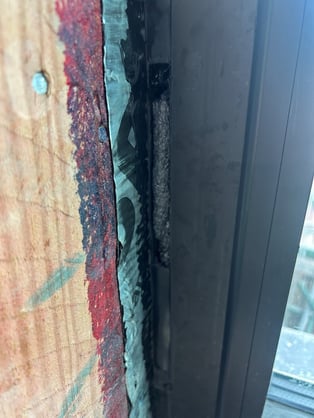
 Exterior sealant joints are expected to remain intact for 15–20 years while withstanding
building movement, temperature extremes, UV radiation, bulk water exposure, and pressure differentials. One of the most underappreciated components in meeting that standard is the closed-cell foam backer rod. When backer rod is omitted or improperly installed, movement stressors — building settling, thermal cycling, and material temperature differential — become leading contributors to premature adhesive or cohesive sealant failures.
When it comes to optimizing the movement capabilities of a sealant joint, backer rod provides three fundamental functions that are frequently overlooked:
1. It controls sealant depth. This is the function most people recognize — an open joint without a stop wastes product and money. But depth control is also essential to achieving proper depth-to-width ratios. Most manufacturers require sealant depth to be half the joint width: a ½" wide joint should be ¼" deep. This ratio is the fundamental balance point for achieving advertised movement capabilities without premature failure. Backer rod must be installed to the correct depth, not simply stuffed into an opening.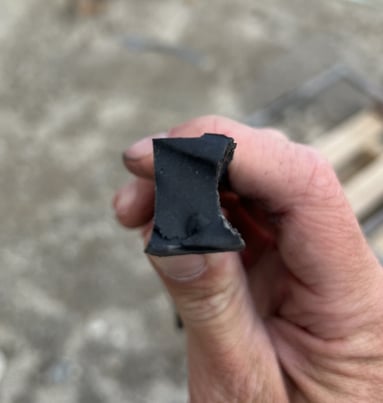
2. It shapes the sealant. When a sealant bead is properly tooled — as it always should be — tooling shapes the sealant on both the visible surface and the backer rod side. The result, viewed in section, is an hourglass profile. This profile, combined with an appropriate depth-to-width ratio, further optimizes movement performance. That's why backer rod must be correctly sized for the joint — at window openings, different sides of the opening may require different diameters depending on window placement. Using small-diameter backer rod twisted together, or substituting spray foam, compromises the joint shape and undermines performance.
3. It creates a bond break. Sealant movement depends on adhesion to exactly two surfaces. Bonding to a third surface creates a restraint point that limits movement and accelerates failure. Closed-cell backer rod allows depth control and the hourglass profile to be achieved without bonding to the sealant, preserving the two-sided adhesion the joint requires.
Respect the backer rod. It's a simple, inexpensive accessory — but it does far more than meets the eye.